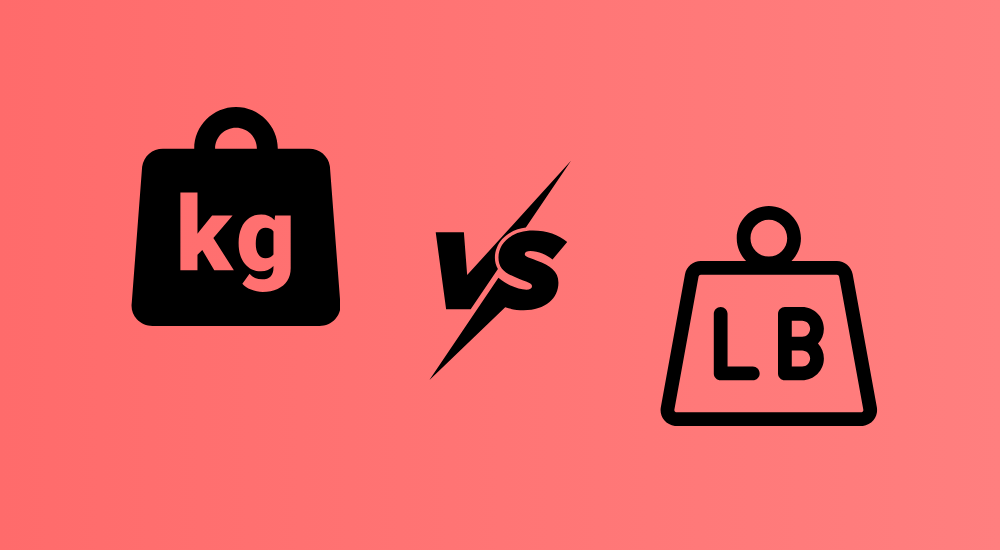
Our weight converter makes it easy to convert between different weight units including kilograms, pounds, ounces, grams, stone, and tons. Simply enter a value, select your unit, and instantly see conversions to all other weight measurements.
Perfect for cooking, fitness tracking, international shipping, or any situation requiring weight conversion.
The converter uses precise conversion factors to accurately translate between all major weight units.
Input value Enter any weight value you want to convert. The converter accepts decimals for precise measurements.
Select unit Choose which unit you’re converting from using the dropdown menu. Options include kilograms, pounds, ounces, grams, milligrams, stone, metric tons, and US tons. The converter automatically handles the conversion math.
Instant results All conversions appear immediately as you type. See your weight in all eight units simultaneously, making it easy to compare and find the measurement you need.
The converter handles eight different weight measurement systems used around the world.
Kilograms (kg): The standard metric unit of mass used in most countries worldwide. 1 kilogram = 1000 grams. Used for body weight, food, and general measurements in metric countries.
Pounds (lbs): The primary weight unit in the United States and some other countries. 1 pound = 16 ounces = 0.453592 kilograms. Commonly used for body weight and food in the US.
Ounces (oz): A smaller unit in the imperial system. 1 ounce = 28.35 grams. Often used for food portions, precious metals, and postal weight in the US and UK.
Grams (g): A metric unit equal to one-thousandth of a kilogram. Perfect for precise measurements in cooking, medicine, and science. 1000 grams = 1 kilogram.
Milligrams (mg): A very small metric unit equal to one-thousandth of a gram. Used primarily in medicine and chemistry for precise dosages and measurements.
Stone (st): A British imperial unit still used in the UK and Ireland for body weight. 1 stone = 14 pounds = 6.35 kilograms. Rarely used outside these regions.
Metric Tons (t): Also called tonnes. 1 metric ton = 1000 kilograms. Used for large-scale measurements like vehicle weight, cargo, and industrial materials.
US Tons: The American ton, also called short ton. 1 US ton = 2000 pounds = 907.18 kilograms. Used in the United States for heavy weights.
Understanding these key conversions helps you quickly estimate weights mentally.
1 kilogram = 2.205 pounds (approximately 2.2 lbs) 1 pound = 0.454 kilograms (approximately 0.45 kg) 1 pound = 16 ounces 1 ounce = 28.35 grams 1 stone = 14 pounds = 6.35 kilograms 1 kilogram = 1000 grams 1 gram = 1000 milligrams
Body weight (75 kg): A person weighing 75 kg equals 165.35 lbs, 11.81 stone, 75,000 grams, or 2,645.55 ounces. This is a typical adult weight in metric countries.
Newborn baby (3.5 kg): A newborn weighing 3.5 kg equals 7.72 lbs, 3,500 grams, or 123.46 ounces. Birth weight is reported in pounds in the US but kilograms in most other countries.
Cooking flour (500 g): A standard bag of flour weighing 500 grams equals 0.5 kg, 1.10 lbs, or 17.64 ounces. Recipe conversions often require this calculation.
Luggage limit (23 kg): A typical airline baggage allowance of 23 kg equals 50.71 lbs. This is why many airlines list limits as “23 kg / 50 lbs” to accommodate both systems.
Gold bar (400 oz): A standard gold bar weighing 400 troy ounces equals approximately 11.34 kg or 25 pounds. Precious metals use troy ounces which differ slightly from regular ounces.
Small car (1.2 tons): A compact car weighing 1.2 metric tons equals 1,200 kg, 2,645.55 lbs, or 1.32 US tons.
The metric system (kilograms, grams) is used by most countries and is based on powers of 10, making conversions simple. It was developed in France in the 1790s and designed for universal adoption.
The imperial system (pounds, ounces, stone) developed in Britain from historical units and remains in use primarily in the United States, UK, and a few other countries. It’s based on everyday objects and traditional measurements rather than mathematical convenience.
This creates ongoing need for conversion tools, especially in international commerce, travel, science, and cooking where both systems regularly interact.
Confusing stones and pounds: In the UK, people often say “11 stone 7” meaning 11 stone and 7 pounds (161 pounds total). Americans might interpret this as 11.7 of something, causing confusion.
Metric ton vs US ton: These are different units. A metric ton (1000 kg) equals 1.102 US tons. Shipping and freight documents must specify which ton is meant.
Using wrong ounce type: Regular (avoirdupois) ounces and troy ounces are different. If you’re buying gold or silver, you need troy ounces. For food, you need regular ounces.
Decimal placement errors: Accidentally moving a decimal point turns 75 kg into 7.5 kg or 750 kg. Always double-check your result makes sense for what you’re measuring.
Assuming 1 kg = 2 lbs exactly: While convenient for mental math, 1 kg actually equals 2.205 lbs. For precise applications, use the exact conversion factor.
Also read: O vs 0 Checker